KEMRI KASH Conference Day 2: Kenya Charts a Bold Path Toward Vaccine Manufacturing and Medical Self-Reliance
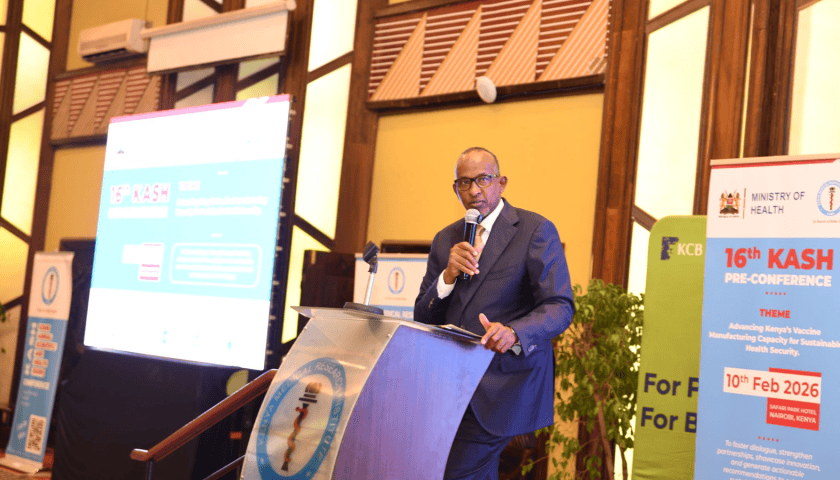
Day two of the KEMRI KASH Conference shifted the conversation from access to ambition, as health leaders, researchers, and policymakers outlined a clear vision: positioning Kenya as a regional vaccine manufacturing hub and advancing the country’s capacity in pharmaceutical and medical development, similar to established models seen in countries like South Africa.
The discussions underscored a growing consensus that Africa must move beyond reliance on imported vaccines and medicines. For Kenya, this means investing in local manufacturing, strengthening research institutions, and building regulatory and technical capacity to support end-to-end vaccine production—from development to distribution.
Kenya’s Aspiration to Become a Vaccine Manufacturing Hub
Speakers emphasized that Kenya is strategically placed to serve East and Central Africa due to its existing research infrastructure, skilled workforce, and strong public health institutions such as KEMRI. Establishing local vaccine manufacturing was presented not only as a public health necessity, but also as an economic and strategic opportunity.
Local production would reduce delays caused by global supply chain disruptions, lower costs over time, and ensure faster responses to outbreaks and emerging diseases. Beyond health security, the move would create skilled jobs, stimulate biomedical innovation, and position Kenya as a leader in Africa’s pharmaceutical value chain.
South Africa was frequently referenced as an example of what is possible when sustained investment is made in medical research, manufacturing facilities, and regulatory systems. Participants noted that Kenya can follow a similar trajectory—adapted to its own context—by aligning government policy, private sector investment, and international partnerships.
Advancing Medical and Pharmaceutical Development
Day two also highlighted the need for broader development in medicine, not just vaccines. This includes strengthening local drug formulation, clinical trials, quality assurance, and pharmacovigilance systems. Speakers stressed that medical self-reliance is built over time and requires consistent funding, skilled human capital, and trust in locally produced medicines.
Research institutions were encouraged to deepen collaboration with universities, manufacturers, and global partners to accelerate innovation while ensuring high safety and quality standards. Regulatory bodies were also recognized as critical players in ensuring that locally produced vaccines and medicines meet international benchmarks.
Protecting Life Early: The Importance of Newborn and Maternal Vaccination
A central theme of the day was the importance of protecting children at the earliest stages of life. Experts reaffirmed that vaccination remains one of the most effective public health interventions, particularly for newborns and infants whose immune systems are still developing.
The conference emphasized two key approaches: vaccinating newborns directly according to national immunization schedules, and vaccinating mothers during pregnancy to pass protective antibodies to the child. Maternal immunization was highlighted as a powerful tool in preventing severe illness in the first months of life, when infants are most vulnerable.
Speakers noted that improving vaccine availability alone is not enough. Community education, trust-building, and consistent access—especially in underserved and rural areas—are essential to ensure that both mothers and children receive timely vaccinations.
Looking Ahead
Day two of the KEMRI KASH Conference made it clear that Kenya’s health future is being actively shaped. The vision presented goes beyond short-term interventions and points toward long-term resilience: a country capable of producing its own vaccines, advancing medical innovation, and safeguarding its population from birth.
As discussions continue, the challenge will lie in translating vision into action—through policy implementation, sustained investment, and coordinated partnerships. If achieved, Kenya’s emergence as a vaccine manufacturing and medical development hub could mark a defining chapter in the nation’s public health and economic story.