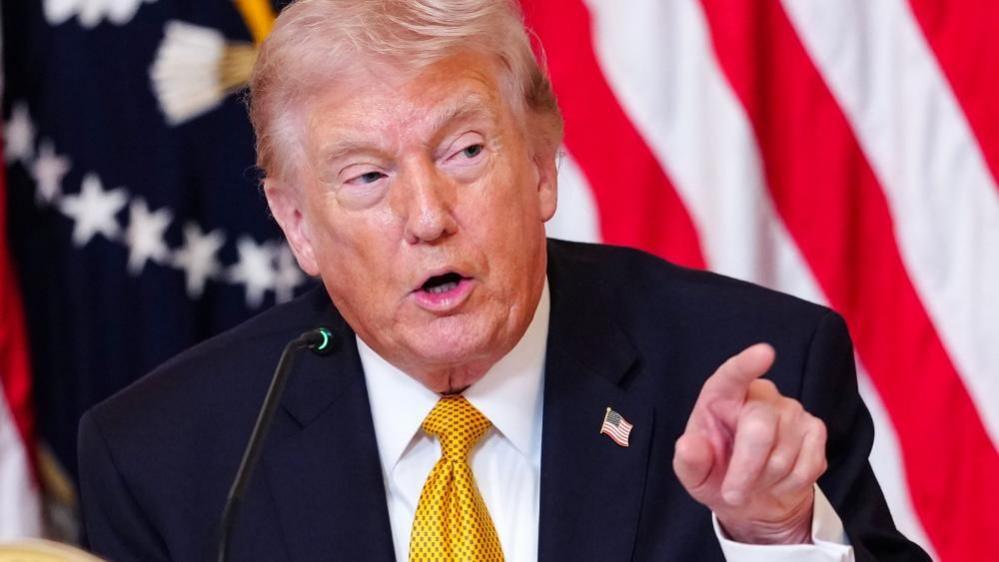
In a move that has sent shockwaves through diplomatic and defense circles, Donald Trump has once again raised the possibility of withdrawing the United States from NATO—a cornerstone of Western security for over seven decades.
This is not merely rhetoric. It is a signal of a deeper transformation in how power, loyalty, and global protection are being renegotiated at the highest levels of leadership.
The Core of the Threat: “Pay or Protect Yourself”
At the heart of Trump’s position is a long-standing grievance: that many NATO members are not contributing enough financially to their own defense.
He has repeatedly argued that the United States carries a disproportionate burden, effectively subsidizing the security of wealthy European nations. His latest statements sharpen that stance—suggesting that failure to meet defense spending targets could lead to the U.S. stepping back, or even fully exiting the alliance.
This reframes NATO from a collective security pact into something closer to a transactional arrangement.
The message is clear:
Security, under Trump’s doctrine, is no longer unconditional—it is earned.
Why NATO Matters So Deeply
Since its founding in 1949, NATO has operated on one defining principle:
an attack on one member is an attack on all.
This doctrine has underpinned stability across Europe and deterred major global conflicts for decades. The United States, as NATO’s most powerful member, has been its backbone—militarily, financially, and symbolically.
A U.S. withdrawal would not just weaken NATO—it would fundamentally alter the balance of global power.
Global Implications: A Vacuum of Power
If the U.S. were to pull out, several immediate consequences could unfold:
1. A More Vulnerable Europe
Without American military backing, European nations would face increased pressure to rapidly scale their own defense capabilities. This could lead to internal fragmentation—or a rushed militarization across the continent.
2. Strategic Openings for Rivals
A weakened NATO could embolden global powers like Vladimir Putin, creating opportunities to expand influence, particularly in Eastern Europe.
3. A Shift in Global Alliances
Countries may begin forming new regional defense blocs, redefining alliances in a way that moves away from U.S.-centric global order.
The Domestic Angle: Power, Politics, and Positioning
Trump’s NATO stance is not only about foreign policy—it is also deeply political.
By challenging international commitments, he reinforces his “America First” doctrine, appealing to a base that views global alliances as costly and, at times, exploitative.
At the same time, critics argue that such threats weaken trust in U.S. leadership and make allies question America’s long-term reliability.
Between Strategy and Shock Value
There is an ongoing debate among analysts:
- Is this a negotiation tactic?
A high-stakes strategy designed to pressure allies into increasing defense spending. - Or a genuine policy direction?
A real willingness to dismantle long-standing alliances in favor of a more isolated, self-focused America.
The answer may be both.
Trump’s leadership style often blends disruption with negotiation, using bold threats to extract concessions while keeping the world uncertain.
Final Insight: The Redefinition of Loyalty
Trump’s NATO warning is about more than defense budgets—it is about redefining the nature of global loyalty.
In his world:
- Alliances must prove their value
- Power must be reciprocated
- Protection must be paid for
Whether this approach strengthens America’s position or destabilizes decades of strategic balance remains to be seen.
But one thing is undeniable:
The conversation around NATO is no longer about preservation—it is about survival in a new era of transactional power.
Leave a Reply