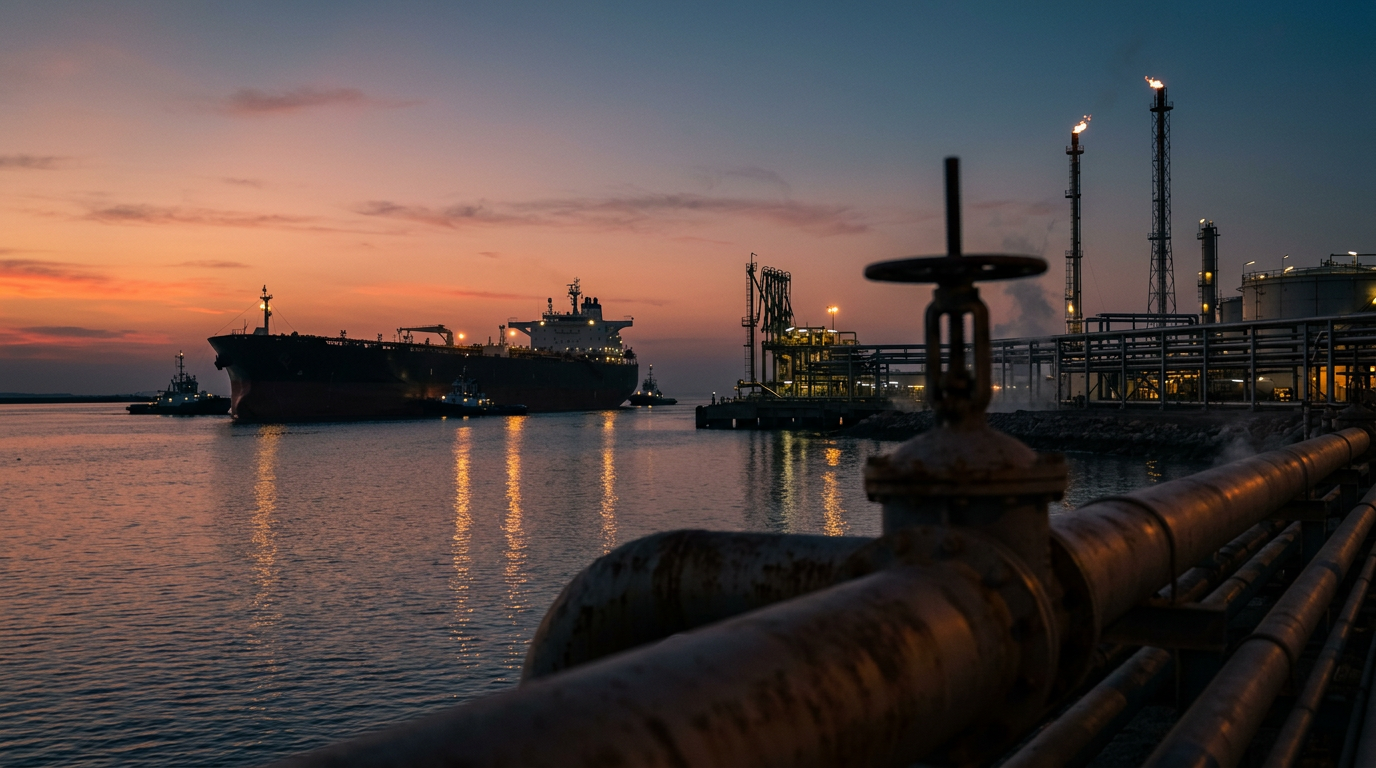
Renewed tensions around the Strait of Hormuz are sending fresh waves of anxiety through global markets, as investors weigh the risks of disruption along one of the world’s most strategically important energy corridors.
Oil and gas prices have moved higher amid concerns that instability in the region could affect the flow of crude through the narrow maritime passage, through which roughly a fifth of global oil supply passes. The implications extend far beyond the energy sector, touching inflation expectations, trade costs, industrial production, and investor confidence.
European equities have already shown signs of pressure as markets react to rising energy costs and the prospect of prolonged geopolitical uncertainty. For investors, the concern is not simply the immediate price movement in commodities, but the possibility that sustained disruption could trigger broader economic consequences, particularly at a time when many economies remain sensitive to inflation and higher borrowing costs.
The renewed energy shock is also reviving fears that central banks could face a difficult balancing act. If higher oil and gas prices feed into transport, manufacturing, and consumer costs, inflationary pressures could intensify just as policymakers had hoped for greater stability. That scenario risks complicating interest rate decisions and unsettling financial markets further.
Beyond market volatility, the Strait of Hormuz remains a powerful symbol of how geopolitical risk can rapidly translate into economic stress. Even the perception of instability in such a critical corridor can alter pricing behavior, disrupt supply expectations, and prompt defensive positioning across asset classes.
For global business leaders, the developments are reinforcing concerns about energy security, supply chain resilience, and exposure to geopolitical chokepoints. For policymakers, they underscore the fragility of the global economic environment, where regional tensions can have immediate worldwide consequences.
What markets are responding to is not merely a spike in energy prices, but the possibility of a broader shock—one capable of reshaping inflation trends, trade flows, and investor strategy in the months ahead.
In this environment, the energy story is no longer just about oil. It is increasingly about risk, power, and the vulnerability of the global economy to disruption at its most strategic pressure points.
Leave a Reply