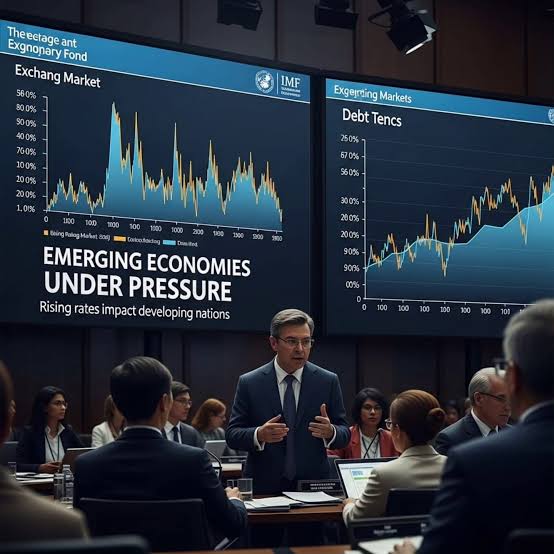
Developing markets are coming under intensifying pressure as a dangerous mix of rising debt burdens, higher energy import costs, and slowing growth begins to reshape the global economic risk landscape.
Across several emerging economies, the strain is becoming harder to ignore. Governments already grappling with fragile public finances are facing mounting pressure as borrowing costs remain elevated, currencies face volatility, and external shocks continue to weigh on recovery prospects.
Higher energy prices are adding to the challenge, particularly for import-dependent economies where rising fuel costs can widen trade deficits, strain foreign exchange reserves, and feed inflationary pressures at home. For countries with limited fiscal space, the impact is especially severe, complicating efforts to support growth while managing social and economic stability.
At the same time, weaker global demand and softer growth are limiting export earnings for many developing economies, reducing a critical source of resilience just as financial vulnerabilities deepen. This combination of external and domestic pressures is turning emerging markets into a focal point for investors, lenders, and policymakers.
The consequences extend well beyond national borders. Growing stress in developing markets is becoming a major story in sovereign risk, as concerns rise over debt sustainability, refinancing pressures, and the possibility of broader financial instability in vulnerable economies.
It is also reshaping debates around development finance, as questions intensify over whether multilateral institutions, creditors, and global partners can provide sufficient support in a more volatile economic environment. For many lower-income countries, access to affordable financing is becoming as critical as growth itself.
Commodity politics is emerging as another defining dimension of the pressure. As energy costs rise and resource competition intensifies, developing economies are increasingly navigating a more complex global landscape where commodity dependence, strategic minerals, and geopolitical interests are becoming intertwined.
For investors, the story is no longer simply about growth opportunities in emerging markets, but about exposure to deeper structural risks. For policymakers, it is a warning that economic vulnerabilities in developing economies could carry wider consequences for global stability.
What is unfolding is not just a cyclical slowdown, but a broader test of resilience across the developing world. And as debt stress, energy shocks, and weaker growth converge, the pressure building in emerging markets is becoming one of the most important stories in global business affairs.
Leave a Reply