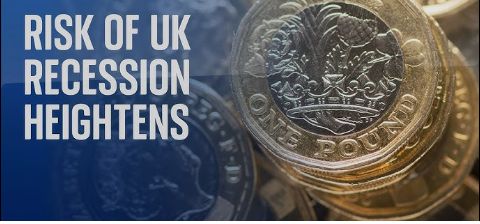
The United Kingdom is moving through a moment of quiet tension—an economy under visible pressure, yet still positioned with the kind of strategic depth that keeps global investors watching closely. Nowhere is this duality more evident than in London, a city that continues to project financial authority even as underlying economic signals grow more complex.
Inflation has begun to edge upward again, driven by energy volatility, rising food prices, and the persistent cost of living strain that has reshaped household behavior. While the figures themselves may not suggest crisis, they reflect a deeper global entanglement—where geopolitical instability, particularly in energy-producing regions, flows directly into domestic economic reality. The United Kingdom is no longer insulated from these shifts; it is intricately tied to them.
At the policy level, Rachel Reeves faces a delicate balancing act. Fiscal discipline must be maintained, yet the room to maneuver is narrowing. External shocks—from global conflict to commodity price swings—are not just distant events; they actively shape the boundaries of national economic strategy. In this environment, restraint becomes as important as action, and credibility is measured not only by growth, but by stability.
Yet, despite these pressures, the UK retains a defining advantage: its structural importance in the global system. London remains one of the world’s most sophisticated financial ecosystems, a hub where capital, policy, and influence intersect. This is not easily replicated. It is built on decades of institutional trust, legal infrastructure, and global connectivity. Even in periods of slowdown, such foundations do not disappear—they recalibrate.
What is emerging instead is a more cautious economic rhythm. Businesses are becoming increasingly selective, expansion is approached with greater discipline, and hiring reflects a more measured outlook. Wage growth has softened, not collapsing but signaling a shift toward prudence. It is a climate where confidence has not vanished, but it has matured—less exuberant, more calculated.
This recalibration is not purely defensive. Beneath the surface, the United Kingdom is actively positioning itself within future-facing industries. Investment in artificial intelligence, financial technology, and strategic services continues to gather momentum, reinforcing the country’s relevance beyond traditional sectors. London, in particular, is evolving—not away from finance, but into a broader platform where finance, technology, and global policy increasingly converge.
The result is an economy that feels paradoxical. On one hand, there is undeniable strain: rising costs, global uncertainty, and constrained fiscal space. On the other, there is enduring influence—an ability to remain central in conversations that define the next phase of global growth. This is what makes the current moment less about decline and more about transition.
For global observers, the message is clear. The United Kingdom is not retreating; it is adapting. Pressure has not diminished its importance—it has refined it. And in a world where stability itself has become a premium asset, that refinement may prove to be one of its greatest strategic strengths.
Leave a Reply