In New York City, power has always been defined by its ability to attract and hold capital. It is a city built not just on ambition, but on the quiet agreement between wealth and opportunity—a place where the world’s most influential players choose to stay, build, and expand. Today, that agreement is being tested.
A new tension is emerging at the heart of the city’s economic identity: the balance between taxation and capital retention.
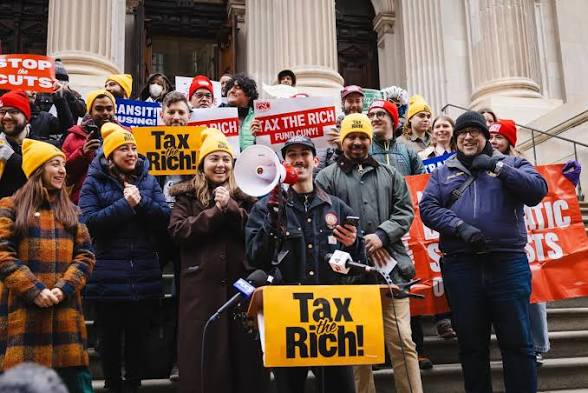
On one side lies the fiscal reality of a global metropolis. Maintaining infrastructure, public services, and social systems at New York’s scale requires significant revenue. Policymakers are increasingly exploring ways to tap into the city’s immense concentration of wealth—particularly through taxes targeting high-value property, luxury assets, and top earners.
On the other side stands a more fluid and less predictable force: capital itself.
Unlike in previous decades, wealth today is highly mobile. Investors, hedge fund leaders, and global entrepreneurs are no longer tied to a single geography. Cities such as Miami, Dubai, and Singapore are positioning themselves as low-tax, high-lifestyle alternatives—offering not just financial incentives, but a compelling narrative of ease, efficiency, and strategic advantage.
This shift is redefining the rules of engagement. Taxation, once a relatively stable lever of governance, has become part of a broader negotiation. Each policy decision now carries reputational weight, influencing how the city is perceived by those it relies on most for investment and economic momentum.
The consequences are already visible in subtle but meaningful ways. Large-scale real estate investments are being reconsidered. Corporate footprints are being reassessed. High-net-worth individuals are diversifying their geographic presence, not necessarily abandoning New York, but reducing their exposure to it.
Yet this is not a story of decline—it is a story of recalibration.
New York remains one of the most powerful economic centers in the world. Its financial markets, cultural influence, and institutional depth are unmatched. But its dominance is no longer automatic. It must now be actively maintained through a delicate balance of policy, perception, and positioning.
The city’s challenge is not simply to generate revenue, but to do so without eroding the very foundation that makes it exceptional. Too aggressive an approach risks accelerating capital flight. Too cautious a stance may limit its ability to sustain its global stature.
What emerges is a sophisticated equilibrium—one where success will depend on strategic nuance rather than blunt force.
For investors and business leaders, this moment presents both risk and opportunity. New York is not losing relevance, but it is evolving into a more intentional environment—one where presence must be justified, and where capital flows are guided as much by sentiment as by structure.
In this new era, the city’s greatest asset will not be its history, but its ability to adapt without losing its essence.
Because in a world where capital can move anywhere, the true power of New York will lie in its ability to remain the place where it still chooses to stay.
Leave a Reply