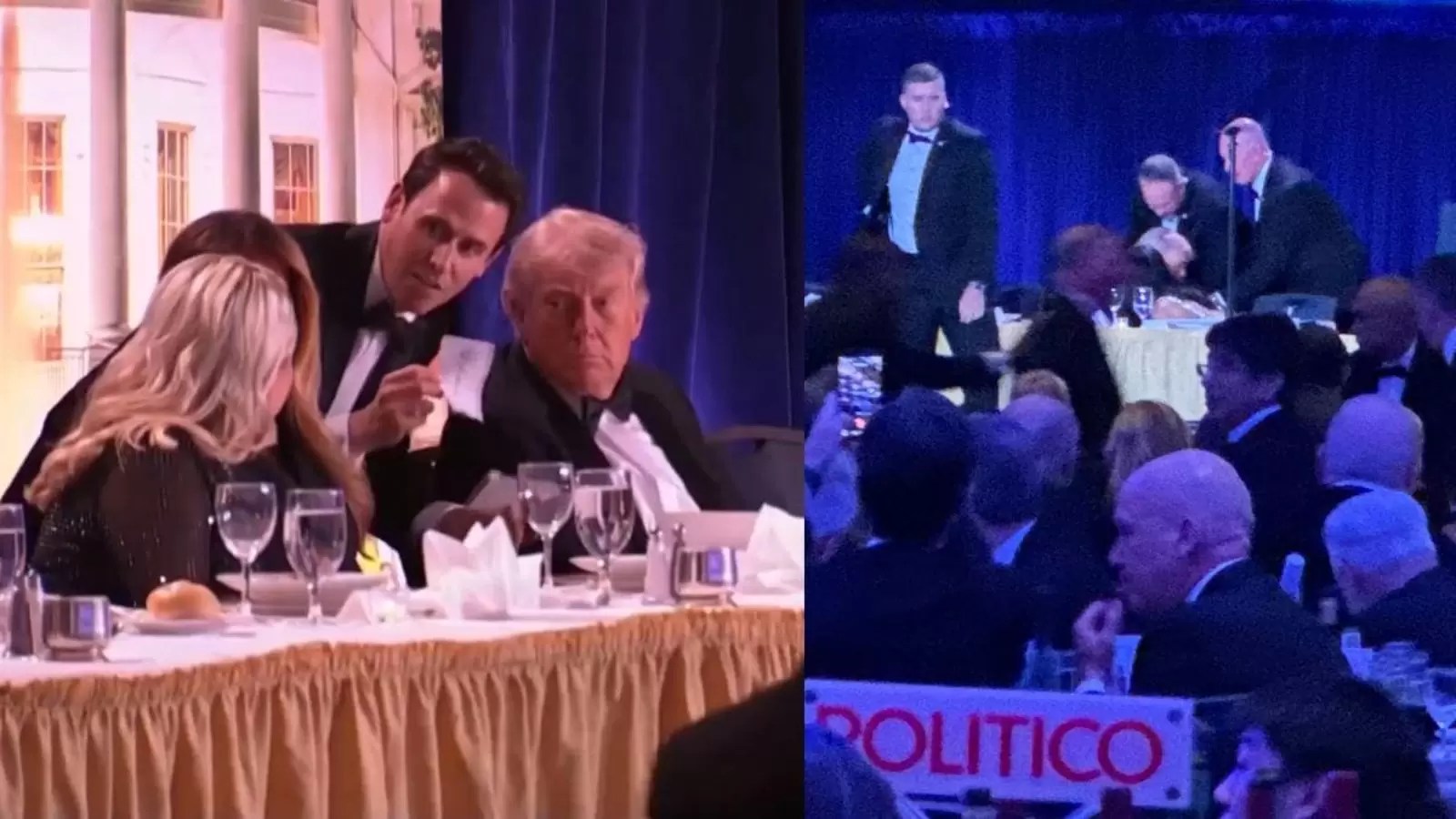
A night designed to celebrate media, influence and political tradition instead became a moment of terror and reflection in Washington, as a security incident unfolded around the prestigious White House Correspondents’ Dinner—one of the most high-profile gatherings linked to the White House.
The event, attended by senior government officials, journalists and global observers, was briefly disrupted after an armed individual attempted to approach the secure perimeter surrounding the venue. Security agencies moved swiftly, intercepting the suspect before any direct harm could be carried out, reinforcing the depth and precision of protective systems surrounding the United States’ political leadership.
Authorities have since confirmed that the individual is facing serious federal charges, with preliminary findings indicating a deliberate attempt to target high-level figures present at the gathering. While no injuries were reported, the gravity of the moment has not been lost on those within political and diplomatic circles.
What makes the incident particularly significant is not only its proximity to power, but the symbolism attached to the setting itself. The White House Correspondents’ Dinner has long stood as a carefully curated intersection of politics, media and influence—where visibility, access and narrative converge. That such a moment could be disrupted, even briefly, underscores the evolving nature of modern security threats.
In the aftermath, federal agencies have intensified investigations, examining the suspect’s background, affiliations and possible motivations. Early indications suggest ideological undercurrents, though officials have remained measured, emphasizing that the full scope is still under review.
The response across the political landscape has been swift, with leaders condemning the act and calling for unity in the face of rising tensions. Beyond immediate security concerns, the incident has reignited deeper conversations about political rhetoric, public safety and the delicate balance between openness and protection in democratic systems.
Within Washington, security presence has been noticeably reinforced, particularly around key institutions and high-profile events. The message, subtle yet unmistakable, is one of vigilance.
In a city where power is both performed and protected, the evening’s disruption serves as a quiet but powerful reminder: even the most symbolically secure spaces require constant adaptation in an increasingly unpredictable world.
Leave a Reply